
Spread Co is a UK broker operating since 2006, focused on spread betting and CFD trading. It doesn’t try to compete on branding or hype; it positions itself as a straightforward, regulated option for traders who want a simple setup without unnecessary features.
It’s FCA‑regulated, offers access to the main global markets, and promotes fixed spreads as its core selling point. For traders who prefer predictability over aggressive pricing or advanced tools, that approach has appeal.
But expectations need to be realistic. Spread Co isn’t aiming to match the larger, more sophisticated brokers. It doesn’t offer cutting‑edge platforms or a wide product range. What it provides is a functional, basic trading environment. The question is whether that’s enough in a market where many competitors offer far more.

What Spread Co Has to Offer
Regulation and Safety
Spread Co is authorised by the UK Financial Conduct Authority, which places it within a well‑regulated framework. Client funds are held in segregated accounts, and the Financial Services Compensation Scheme provides protection up to the standard limit if the firm fails.
Retail leverage follows UK rules, typically capped at 1:30. It’s restrictive compared to offshore brokers, but it’s designed to limit excessive risk. Overall, the regulatory setup is solid and behaves exactly as you’d expect from a UK‑regulated firm.
Trading Platforms
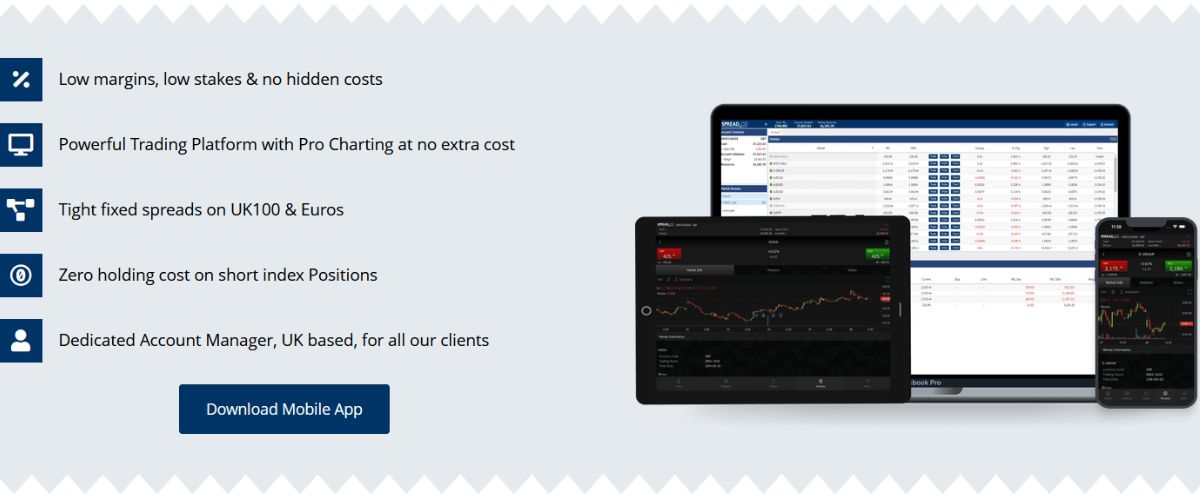
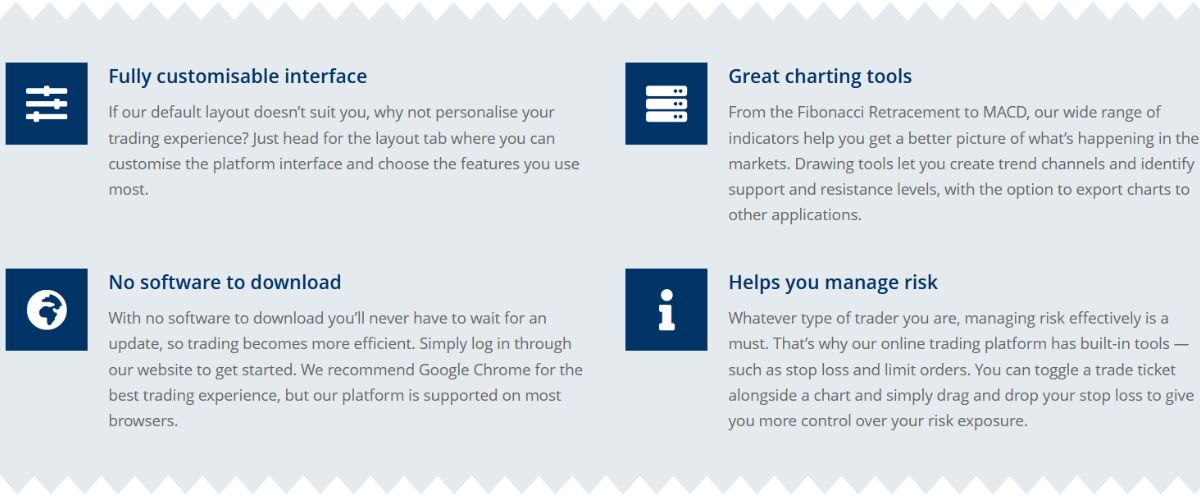
Spread Co uses its own proprietary, web‑based platform. It works across desktop and mobile and covers the essentials: charting, order placement, position management, and basic analysis. The charting tools are decent and familiar to anyone who has used TradingView‑style layouts.
The limitations appear once you look beyond the basics. There’s no meaningful support for automation, no scripting, and fewer tools than you’d find on MetaTrader or cTrader. Execution is acceptable, but the platform feels dated and lacks depth. Beginners will manage fine; experienced traders may find it restrictive.
Account Types
The account structure is simple. Most traders use a standard account, with the option of a limited‑risk version that applies guaranteed stop losses by default. Minimum deposits are low, which keeps the barrier to entry small.
The downside is the lack of progression. There are no advanced tiers, no improved pricing for higher‑volume traders, and no professional‑level conditions. The simplicity is intentional, but it also limits growth for more active or experienced users.
Markets and Instruments
Spread Co offers the core asset classes: forex, major indices, commodities, and a selection of shares and ETFs. It’s enough for typical spread‑betting activity, but the range is narrow compared to larger brokers. There’s limited depth within each category and little exposure to niche or emerging markets. It covers the basics, but not much more.
Fees and Spreads
Fixed spreads are the defining feature. The advantage is consistency, you know the cost before entering a trade, even during volatile periods. The trade‑off is competitiveness: in normal conditions, variable spreads at other brokers are often tighter, meaning you may pay more over time.
There are occasional reports of re‑quotes or slower execution in fast markets, which is common with fixed‑spread models. Pricing is predictable, but not the most competitive.
Deposit and Withdrawal Options
Funding is straightforward but dated. Spread Co supports bank transfers and card payments, both processed reliably. However, there are no e‑wallets, instant payment options, or modern alternatives. Withdrawals are handled within a reasonable timeframe, but the overall process feels traditional rather than convenient.
Customer Support and Education
Customer support is functional but inconsistent. Some traders report helpful onboarding; others mention slower responses for more complex issues. It’s adequate, but not a strong point.
Education is minimal. The available material covers basic concepts but lacks structure and depth. Beginners will need external resources, and experienced traders won’t find much value here.
Spread Co Pros and Cons
Pros
Cons
Spread Co Reviews from the Web

Spread Co Score and Reviews on Trustpilot
User feedback on Spread Co is generally positive, but rarely enthusiastic. Traders often mention the platform’s simplicity and the reassurance of FCA regulation. The broker is seen as reliable and easy to use, which matches its overall positioning.
Criticism is consistent. Some users report execution delays during volatile periods, others say the platform feels outdated, and many note that the broker hasn’t evolved much over time. The overall impression is steady: Spread Co is dependable, but it doesn’t stand out.
matt101uk from Trade2Win: “Have tried the new spreadco platform web platform today, looks a bit slicker than before, decent charts and hedging positions now. Have any of you got a live account – are they reliable enough for a small company? – looks like they’ve been around for a few years now… anybody got any feedback please?”
dzhamilya akautdinova from Trustpilot: “I work with this platform over 4 years . I really like their quick response and help if needed
Thank you very much . I definitely suggest you”
Ralph from Trustpilot: “Nice to have someone that I can speak to in case of need. The platform performs well and I am happy to recommend Spread Co to both new and experienced traders.”
Spread Co FAQs
What You Need to Know About Spread Co
Spread Co focuses on getting the basics right. It offers a regulated environment, a simple trading setup, and predictable pricing. For traders who value stability and clarity, it delivers a straightforward, no‑frills experience.
The limitations are clear. The platform is basic, the market range is narrow, and the overall offering feels behind what many competitors now provide. It’s not a broker that prioritises innovation or advanced tools.
For traders who want a simple, regulated way to trade, Spread Co is a reasonable choice. For anyone needing a more advanced, flexible, or feature‑rich platform, stronger alternatives exist.
 StarTrader Broker Reviewed: The Good and the Gaps