
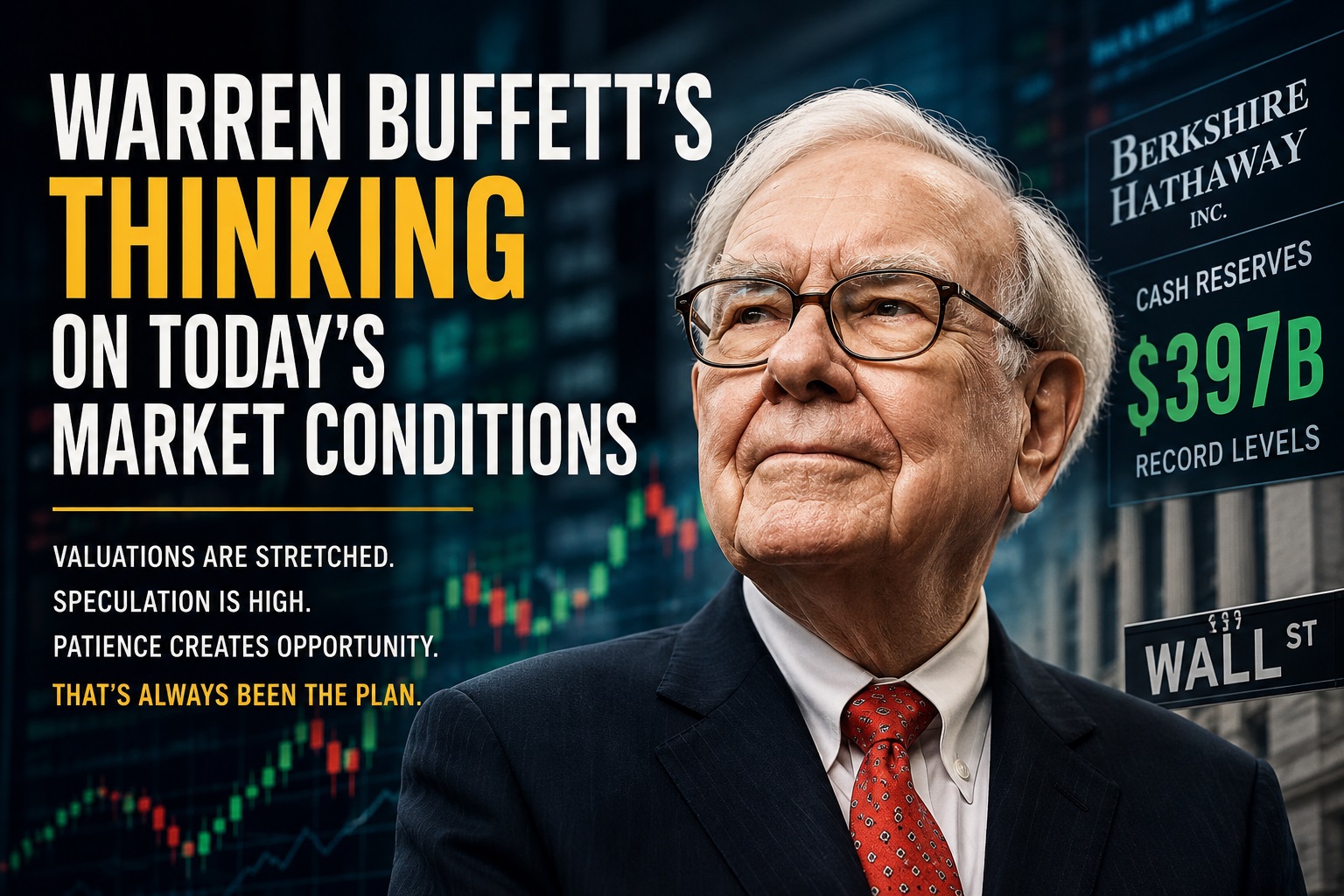
Warren Buffett has spent decades warning investors about the dangers of speculation, emotional decision making, and overpaying for assets. What makes his current stance especially interesting is not just what he is saying, but what he is doing. Berkshire Hathaway is now sitting on an enormous cash pile approaching $400 billion while much of the market continues pushing higher.
That alone tells you a lot about how Buffett sees current market conditions.
He is not predicting a market crash tomorrow. He rarely makes dramatic forecasts. Instead, Buffett tends to communicate through positioning. When Berkshire keeps selling more shares than it buys, avoids major acquisitions, and continues building cash reserves while stock markets trade near record highs, it suggests one thing clearly: he believes valuations are stretched and genuine bargains are difficult to find.
Buffett Is Not Bearish on Investing. He Is Cautious About Prices
One of the biggest misconceptions around Buffett is that holding cash means he has turned negative on stocks completely. That is not really the case.
Buffett has always been a long-term believer in productive businesses and the US economy. What concerns him is the price investors are currently willing to pay for future growth. There is a major difference between liking a company and liking its valuation.
Right now, much of the market is trading on optimism around artificial intelligence, future earnings growth, and the assumption that economic weakness can be avoided. Buffett appears uncomfortable with how quickly investors are pricing in perfect outcomes. Berkshire’s cash position suggests he simply does not see enough opportunities where the reward justifies the risk.
This has been a recurring theme throughout Buffett’s career. He becomes most active when fear dominates markets, not when investors are aggressively chasing returns.
The $397 Billion Cash Pile Says More Than Any Headline
Berkshire Hathaway’s cash reserves have now reached record levels, approaching $400 billion, much of it held in short term US Treasury bills.
That number matters because Buffett has historically preferred owning businesses over holding idle cash. Berkshire only tends to accumulate this much liquidity when Buffett believes opportunities are limited.
Importantly, Buffett does not view cash as wasted potential. He sees it as optionality. Holding large reserves allows Berkshire to move aggressively when markets panic and high-quality assets suddenly become cheap.
This is exactly what Buffett has done repeatedly throughout his career. During financial crises and periods of heavy fear, Berkshire was able to deploy massive amounts of capital into distressed but fundamentally strong businesses. Those moments generated some of Berkshire’s best long-term investments.
Today’s environment appears very different in his eyes. Markets may have experienced volatility, but Buffett does not seem convinced that prices truly reflect fear or economic stress yet.
Buffett Thinks Speculation Has Become Excessive
One of Buffett’s strongest recent comments focused on what he sees as increasingly speculative behaviour in financial markets.
He criticised the explosion in ultra short-term options trading and compared parts of the market to gambling rather than investing. Buffett said markets are currently in a stronger “gambling mood” than he has seen before.
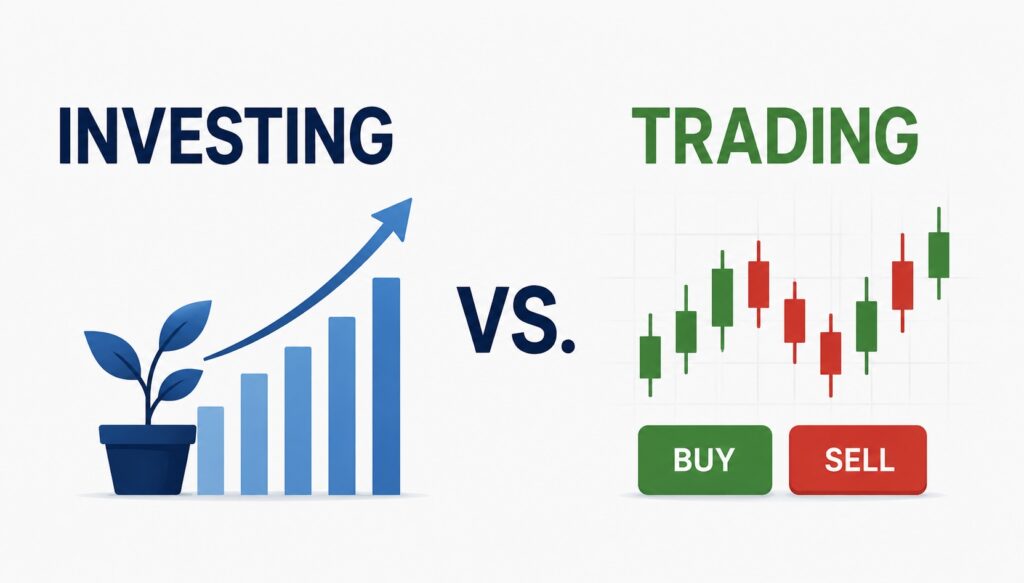
That fits with broader trends across retail investing. Many traders are focused on short term momentum, leveraged options, meme style speculation, and rapid gains rather than business fundamentals or long-term cash flow.
Buffett has never been comfortable with that mindset. His entire philosophy is built around patience, discipline, and valuation. He prefers buying understandable businesses at sensible prices and holding them for years.
The concern is not just that speculation exists. Markets always contain speculation. What appears to concern Buffett is how normalised and widespread it has become.
Why Buffett Is Still Patient Despite Market Pullbacks
Some investors argue that markets have already experienced enough volatility to create opportunities. Buffett clearly disagrees.
Historically, Buffett becomes most aggressive during periods of genuine panic, when investors are desperate to sell and quality businesses become heavily discounted. A mild correction or a brief pullback does not necessarily meet that threshold.
This is an important distinction because many investors mistake any decline for value. Buffett focuses on the relationship between price and long-term earning power. Even after periods of volatility, he may still view many assets as expensive.
That is one reason Berkshire has remained a net seller of equities for multiple quarters while cash reserves continue growing.
From Buffett’s perspective, patience is part of the strategy. He has repeatedly argued that investors do not need to swing at every opportunity. Waiting for the right setup matters more than staying constantly active.
Buffett’s Thinking on Interest Rates and Valuations
Interest rates also play a major role in Buffett’s thinking.
For years, extremely low rates pushed investors further into risk assets because safer alternatives offered almost no return. That environment inflated valuations across technology, growth shares, and speculative assets.
Now the situation has changed. Berkshire can earn meaningful returns simply by holding short term Treasury bills. That changes the opportunity cost of staying patient.
If safe assets are yielding attractive returns while stocks continue trading at elevated valuations, Buffett has less incentive to aggressively deploy capital into overpriced markets.
This is another reason Berkshire’s cash position matters. Buffett is not being forced into risky assets just to generate returns.
What Buffett’s Strategy Means for Ordinary Investors
Buffett’s current positioning does not necessarily mean investors should sell everything and sit entirely in cash. That would oversimplify his approach.
What it does suggest is that investors should probably be more selective than they have been during the recent market rally. Valuation still matters. Risk still matters. Paying any price for growth rarely ends well over the long term.
Buffett’s strategy also reinforces the importance of liquidity and patience. Many investors feel pressure to stay fully invested at all times because markets have rewarded aggressive behaviour in recent years. Buffett appears comfortable doing the opposite.
That mindset becomes especially important late in market cycles, when optimism is high and risk is often underestimated.
Buffett Still Believes Opportunities Will Come
Despite the cautious positioning, Buffett is not pessimistic long term.
If anything, his huge cash reserves suggest confidence that better opportunities will eventually appear. Berkshire is positioning itself to act decisively when markets become more irrational on the downside rather than the upside.
That is classic Buffett thinking.
He has always argued that investing rewards patience more than activity. Some years produce very few compelling opportunities. Other periods create extraordinary setups for disciplined investors willing to wait.
Right now, Buffett appears to believe we are still closer to the first environment than the second.
Warren Buffett’s Final Thoughts
Warren Buffett’s current view of markets is less about predicting an immediate crash and more about recognising stretched valuations, excessive speculation, and limited margin for error. Berkshire Hathaway’s enormous cash reserves, continued stock sales, and cautious tone all point in the same direction: Buffett does not believe this is an especially attractive environment for deploying large amounts of capital.
For investors, the takeaway is not necessarily to become fearful overnight. It is to become more disciplined. Buffett’s approach has always centred on patience, valuation, and long-term thinking rather than chasing momentum or excitement.
In markets driven increasingly by speculation and short-term narratives, that mindset may matter more than ever.
Published: 13 May 2026.