

 FTUK is a proprietary trading firm that targets Forex traders seeking to scale their trading activities without risking their own money. The concept is straightforward: traders prove their skills through an evaluation, and if they meet FTUK’s standards, they receive funding to trade larger positions. But while this opportunity looks promising, the firm’s rules and business model raise some doubts about how supportive it really is to traders aiming for long-term success.
FTUK’s appeal lies in its offer of capital and its focus on disciplined trading, attracting those who believe in their skills but lack the funds to trade big. However, the reality of dealing with FTUK is more complicated than the enticing promise of risk-free trading with someone else’s money. Let’s break down how FTUK actually works, what traders can expect, and why scepticism might be warranted.



How FTUK Operates
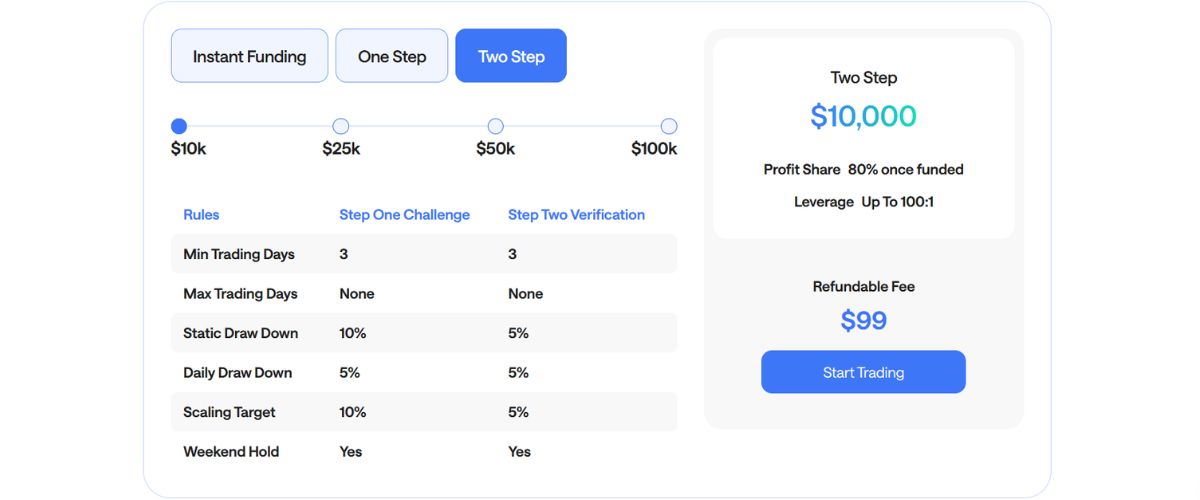
The process of getting funded by FTUK starts with a multi-phase evaluation. Initially, traders must demonstrate their abilities by trading on a forex practice account, hitting strict profit targets within a set period. During this phase, traders face rigid drawdown limits—a cap on the amount of losses they can incur. Meeting these conditions is crucial because even a small slip-up can mean the end of your evaluation journey.
FTUK’s evaluation has two stages. The first stage demands a higher profit target within a limited timeframe, while the second phase offers slightly lower targets but maintains tight risk controls. Passing both stages is the only way to access FTUK’s capital. Once funded, you’re expected to continue trading with disciplined risk management, as the strict rules do not disappear. Traders have to be nearly flawless to avoid breaking these restrictions, which can result in immediate account termination.
What to Expect as a Funded Trader
Achieving funded status with FTUK allows you to trade using a significant amount of capital, which could lead to substantial profits if you manage to navigate their rules successfully. FTUK promises a competitive profit split, letting traders keep a large portion of their gains, but the conditions remain challenging. One wrong move can still result in losing your funded account, even after passing the evaluation.
Traders have also reported mixed experiences regarding payouts. While some have had smooth experiences receiving their profits, others have faced delays and frustrating communication issues with FTUK’s support team. This inconsistency raises concerns about the firm’s reliability and its true level of commitment to supporting profitable traders.
Pros and Cons of Using FTUK
Pros
Cons
From the Web: What Traders Are Saying About FTUK

FTUK Score and Reviews on Trustpilot
Feedback from Reddit and Forex forums paints a mixed picture of FTUK’s reputation among traders.
Positive Feedback: A few traders who managed to pass the evaluation process appreciate FTUK’s disciplined environment, strict risk control standards, and the ability to trade with larger capital without risking their own funds. They acknowledge that for those who can handle the pressure, the profit split is reasonable and can be lucrative.
Negative Feedback: The overwhelming sentiment, however, leans toward scepticism. Traders often criticize the firm’s overly strict evaluation criteria and suggest that FTUK’s business model profits more from traders failing and paying repeated fees than from fostering successful partnerships. Issues like delayed payouts and inconsistent communication also crop up frequently, which erodes confidence in FTUK’s transparency and support.
Reddit thread: “I have been trading manually with FTUK for a while now and had successfully made around a 7% profit on my account, putting me on track to pass Level 2. Suddenly, I was informed by FTUK that my account was being blocked due to alleged usage of gold arbitrage. They suggested that this information was reported to them by Eightcap, the broker involved.”
Is FTUK Really Worth the Effort?
FTUK markets itself as a prop firm designed to support traders in scaling their strategies by offering substantial trading capital. But, beyond the promise of bigger profits, FTUK’s model reveals a different story. The tough evaluation conditions and steep, non-refundable fees create a barrier that feels intentionally high, ensuring that most traders will fail to reach the funded status on their first try, if at all.
While FTUK does offer a decent profit split for those who make it through the rigorous evaluation process, maintaining funded status feels like a constant battle against rules that are almost designed to catch you out. Add to this the delays in payouts and a lack of consistent communication, and you start to question whether FTUK is truly focused on fostering successful traders or just generating revenue from those who fail to meet their criteria.
FTUK’s rigid approach may be suitable for traders who thrive under pressure and are confident in their ability to meet strict targets without slipping up. However, for the average trader, or anyone still developing their trading strategies, FTUK is more likely to be a high-cost gamble than a stable career move. The odds seem skewed in favour of the firm, not the trader.
In the end, FTUK might not be the straightforward opportunity it claims to be. It’s essential to approach this prop firm with realistic expectations and a thorough understanding of the challenges involved. The trading community’s message is clear: while FTUK might work for a select few, most traders should proceed with caution, knowing that the road to success with this firm is filled with more obstacles than just trading performance.